

As Legion Remix advances into its mature stages, a notable shift occurs in player health, mechanics scaling and role balance. What seemed manageable in early phases—where enemy damage and player health were loosely tuned—becomes far more refined. Health pools increase, mitigation effects tighten, and roles like tank, healer and DPS must adapt accordingly. These changes matter because they affect how you allocate your upgrades, trait nodes and group composition moving into high-end content.
This article explores why these changes occur, how they impact gameplay across roles, and what you as a player should adjust in your strategy to stay relevant and effective.
The Scaling Shift: From Broad to Precise Health Tuning
In the earlier weeks of the event, enemy damage and player health inflate quickly, but systems tolerate wide variances: you could tank hits with moderate gear, heal with basic cooldowns, and DPS without fully optimised builds. As the event progresses, however, the margin for error shrinks. Player health pool growth slows, enemy damage increases, and affixes or raid mechanics are tuned to expose weak points in roles. The result: survival depends more on proper trait allocation, cooldown usage and role-specific build refinement.

This shift matters because it demands a change in mindset. Instead of “gear up and push” you must now “gear up *with purpose*” meaning you know what stats or traits you need, you coordinate with your group, and you don’t rely solely on numbers. Player health—and the relationship between health, damage and mitigation—becomes a key axis of power rather than just damage output.
Tank Role Evolution: From Buffer to Keystone
Earlier in Remix, tanks could often succeed simply by soaking damage and holding aggro; in later phases they become keystones of group stability, damage control, and pull routing. Because health pools are tuned tighter, tanks must select traits that enhance not just survivability but also throughput and utility—cleaner pulls, fewer pauses, better cooldown alignment. Bad tank behaviour now costs entire runs, not just time.
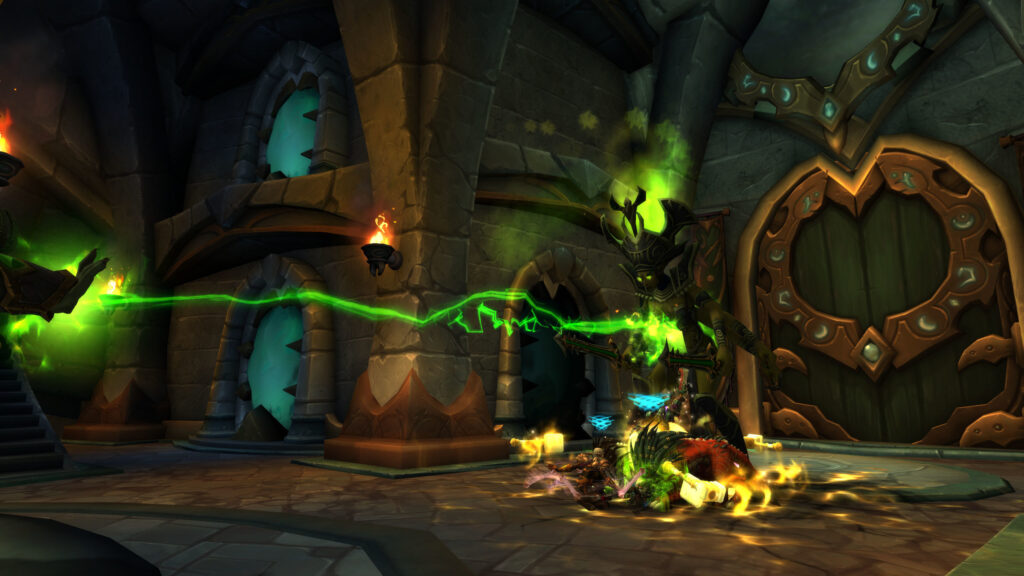
Which means your build must reflect that dual role: invest in mitigation *and* output, prioritise health regeneration traits, and coordinate with DPS to optimise kill windows. For example: if you are tanking, a trait that grants passive damage reduction may be less valuable in late phases than one that boosts your throughput while you’re under heavy pressure. The balance between health and damage becomes central.
Healer Role Adjustments: Throughput, Utility and Tougher Thresholds
In late-phase Remix, healers face more punishing damage spikes, stricter death thresholds, and group expectations that extend beyond pure healing numbers. With players entering content with very high Infinite Power, group damage escalates—and so does the incoming damage. Healers now need to combine consistent output, emergency cooldowns, and utility (cleanses, movement buffs, damage suppression) rather than relying on “heal spam”.
As a result, you’ll want to shift your trait picks: invest in nodes that enhance your defensive throughput (healing under pressure) or mix in damage support traits so you contribute to kills rather than just survival. Coordination with your team’s mitigation and pull strategy also becomes more important. The “buffer” role is gone—healers are now a performance anchor in the late-event meta.
DPS Role Recalibration: From Raw Output to Balanced Contribution
The DPS role in early phases prioritized high numbers and fast clears. In later phases, however, numbers still matter—but they must sit alongside stability, efficient trait allocation and role synergy. Because player health and enemy damage both scale, DPS can no longer neglect survivability, mobility and control mechanics. Over-pulling or mismanaging mechanics now triggers wipe risk rather than just slow clears.

For DPS players, this means building with hybrid mindset: high damage output *and* role utility (interrupts, crowd control, movement). Traits that enhance burst windows or cooldown resets become more valuable than flat stat increases. You’ll also want to invest in health or survival traits as needed. In short: the meta shifts from “who peaks highest” to “who sustains best under pressure”.
How Health/Role Changes Affect Group Composition and Progression
Because each role now demands more specialization, group composition becomes more strategic. Teams no longer accept “any healer, any tank, any DPS”—they expect particular traits aligned with late-phase health/role tuning. For example, a tank with high threat but low mobility might be unsuitable for high-affix dungeons where movement is key. A healer who lacks cooldown utility may struggle in spike damage phases. The health scaling means group roles interlock tightly.
From a progression viewpoint, this means you should plan ahead: select roles you can master, ensure your build matches late-phase demands, and coordinate with your group on expectations (pull size, speed, mechanics). If you treat each role as simply “fill-in”, you’ll fall behind as the health tuning tightens. Successful groups anticipate role demands rather than respond to them.
Practical Adjustments for Your Build and Strategy
Here are some actionable adjustments you should make as you advance into late phases:
- Review your Artifact trait tree and ensure you’ve invested in survival or utility traits relevant to your role.
- Upgrade gear not only for damage but for health, mitigation or cooldown reduction.
- Coordinate with your group: ensure your tank knows when to pull, your healer has cooldowns timed, DPS knows interrupts.
- Practice movement, mechanics, and positioning—because with tighter health margins, mistakes cost more.
By proactively tuning your build and playstyle you avoid being surprised by the ramp-up in health/role demands—keeping you competitive, relevant and effective in the event’s tougher content.
Conclusion
Player health and role balance changes in Legion Remix’s later phases are more than mere number tweaks—they redefine how each role functions and how groups must operate. Tanks become pillars of stability and throughput, healers become anchors of performance, and DPS become utility-aware damage machines. All of this is driven by the tighter health scaling and greater demands of late-phase content.
Recognising these shifts and adjusting accordingly will determine whether you thrive or plateau. Treat your build and role not as fixed assignments but as evolving tools—adapt to the shifting health and role environment, and you’ll master Remix’s toughest challenges with confidence.

Leave a Reply